Home › Road, Street, and Municipal Paving
Precision Asphalt New York provides road paving in Brooklyn, NY for private and municipal streets, access roads, and subdivisions. Our crews handle full depth construction, overlay, and reconstruction with attention to grade and drainage. We coordinate traffic control and phasing to minimize disruption while delivering long lasting road surfaces.
Precision Asphalt New York provides professional road paving throughout Brooklyn, NY, New York and the surrounding area. Our licensed, insured crew delivers safe, clean, on-time work with a free estimate before anything begins. Call (332) 264-5090 or request your free quote.
Road, Street, and Municipal Paving in Brooklyn, NY
Road paving in Brooklyn is not the same as paving a driveway. Different traffic loads, city standards, and underground utilities all affect how the work must be planned and executed. Precision Asphalt New York focuses on streets, access roads, and municipal pavements that have to survive heavy use, tight timelines, and New York City oversight.
We work within NYC DOT and local agency requirements, including typical section details, compaction specifications, and permit conditions. That means when we schedule a road or municipal paving project, we plan around rush hours, school zones, nearby bus routes, and emergency access so crews can work safely while traffic still moves.
Our team is used to the real conditions of Brooklyn: utility cuts every few feet, old cobblestone bases under existing asphalt, soft spots near manholes, and narrow blocks where equipment access is limited. Instead of forcing a one size fits all approach, Precision Asphalt New York adapts base repair, milling depth, and asphalt mix choices to each specific roadway or municipal property so the new surface actually holds up under local conditions.
How Road Paving Actually Gets Done
Before any asphalt is placed, we start with a site assessment. For roads and municipal streets in Brooklyn, this means inspecting existing pavement for fatigue cracking, rutting, ponding water, prior trench patches, and curb conditions. We also locate manholes, valves, catch basins, and any raised structures that will need to be adjusted to final grade.
The next step is milling or full-depth reconstruction. For many city streets, we remove 1.5 to 3 inches of asphalt with a milling machine, then clean and inspect the exposed surface. If we find base failures, such as pumping fines or severe rutting, we cut and excavate those areas and rebuild with compacted aggregate base or asphalt base course.
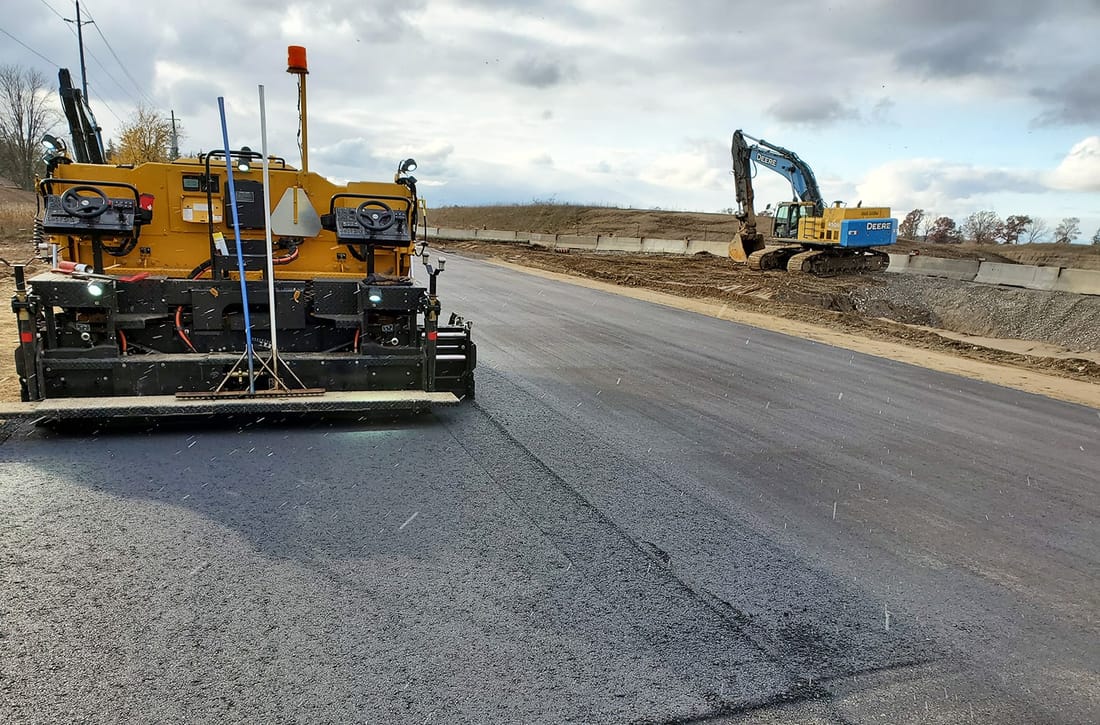
Once the base is sound, we apply tack coat to ensure bonding between layers. Then we place hot mix asphalt using a paver, not by hand raking large areas, so the mat has even thickness and smoothness. Rollers follow immediately for breakdown, intermediate, and finish compaction, reaching specified density so the surface will not ravel or deform under traffic.
On municipal work, we coordinate traffic control, temporary striping, and final thermoplastic markings as needed. By sequencing milling, base repair, paving, and striping correctly, we keep streets closed for the shortest possible time while still achieving long service life.
Material Choices and Mix Designs for Brooklyn Streets
Not all asphalt for road paving is the same. Precision Asphalt New York works with local plants that supply mixes routinely accepted on NYC and NYSDOT projects. For light to moderate traffic municipal roads, we often use dense graded surface mixes that balance smooth ride with durability. For bus routes, intersections, and loading areas, we specify stiffer mixes that resist rutting.
Brooklyn winters with freeze thaw cycles and heavy salting can tear up weak pavements. To handle this, we pay attention to aggregate quality and asphalt binder grade. In some high stress locations, we recommend polymer modified binders that improve resistance to cracking and rutting, especially where buses and trucks brake and turn frequently.
Thickness is another critical factor. A small residential street that carries mostly passenger vehicles can often perform well with a properly compacted base and 2 to 3 inches of asphalt. A municipal parking area for sanitation trucks or a service road for industrial sites may need 4 or more inches in multiple lifts. We explain these options clearly, including what is required by local standards, so owners understand what they are paying for and what performance to expect.
Because we are working in Brooklyn, we also consider noise and drainage on each block. Slight cross slopes, proper curb reveals, and smooth transitions at drive entrances and intersections reduce water pooling and minimize bumping and rattling that nearby residents will notice every day.
Common Road Paving Problems in Brooklyn and How We Prevent Them
Many of the failures we repair in Brooklyn streets are not caused by age alone, but by poor base preparation or rushed utility trench work. You see this as longitudinal cracks over trench lines, potholes along curb lanes where trucks park, and birdbaths that collect water after every storm. Precision Asphalt New York addresses these issues before resurfacing, so the same problems do not reappear in a year or two.
For areas with frequent utility cuts, we reinforce and recompact the trench zones, often with controlled aggregate fill and thicker asphalt base courses. Where curbside lanes are rutted from buses or trucks, we may recommend partial full-depth reconstruction in those strips rather than simply overlaying the entire width.
Drainage is another local concern. Brooklyn has many flat blocks where even a small grade mistake creates standing water. Before paving, we check gutter flow lines and existing catch basin elevations, then adjust milling and paving grades to restore positive drainage. If needed, we coordinate with the owner or agency to raise or lower basins or to correct collapsed curb sections.
Cold joints and poor compaction at seams are a typical cause of early cracking on narrow city streets. We plan paving widths and passes to minimize longitudinal joints and stagger transverse joints. Our crews use proper joint preparation techniques and rolling patterns so lanes tie together cleanly instead of splitting apart under traffic.
What Drives Cost on Road, Street, and Municipal Paving Jobs
Budgeting for road paving in Brooklyn requires more than a price per square foot. Key cost drivers include the existing pavement condition, depth and extent of milling, base repair requirements, traffic control needs, and any utility or structure adjustments.
Heavily cracked or alligatored streets usually need more than a thin overlay. Full-depth patching or reconstruction in failed areas adds excavation, disposal, new base, and additional asphalt, but it also extends the life of the pavement and avoids premature failures. We itemize these repairs in our proposals so decision makers can see what is truly necessary.
Traffic control is another significant factor. Closing a short municipal access road in an industrial area is very different from staging work along a busy Brooklyn avenue with bus routes, bike lanes, and schools. Flaggers, signage, barricades, and off-hours or night work can all impact the final cost.
Work around manholes, valves, catch basins, and curbs also affects pricing. Each structure that must be raised, reset, or surrounded with concrete collars requires labor and materials, and these tasks often must meet specific agency details. Precision Asphalt New York walks the site with you, counts and documents these items, and provides a transparent cost breakdown so there are fewer surprises during construction.
Why Work With Precision Asphalt New York for Local Road Paving
For Brooklyn road, street, and municipal paving, you need a contractor that understands both the technical pavement requirements and the realities of working in a dense city. Precision Asphalt New York is local, so we know which streets back up by 7 a.m., which blocks have chronic drainage issues, and how to coordinate with neighbors and businesses so work gets done with minimal conflict.
We maintain our own paving and compaction equipment sized for city work, including mills and pavers that can operate on narrow streets and around parked vehicles where full closures are not possible. Our crews are used to tight staging areas and often work in short segments to keep access open for residents, emergency vehicles, and deliveries.
Before we start, we provide a clear plan that covers schedule, access, temporary parking or detours, and how we will protect adjacent sidewalks, curbs, and landscaping. During the job, our superintendent stays on site to adjust around weather, traffic, and unforeseen conditions, and to communicate with the owner or municipal representative.
After paving, we can arrange line striping, crosswalks, stop bars, and specialty markings, and we provide guidance on opening to traffic so the asphalt has time to cool and gain strength. Our goal is straightforward: build a pavement structure that works for how Brooklyn roads are actually used, and back it up with clear communication and honest, detailed workmanship.